

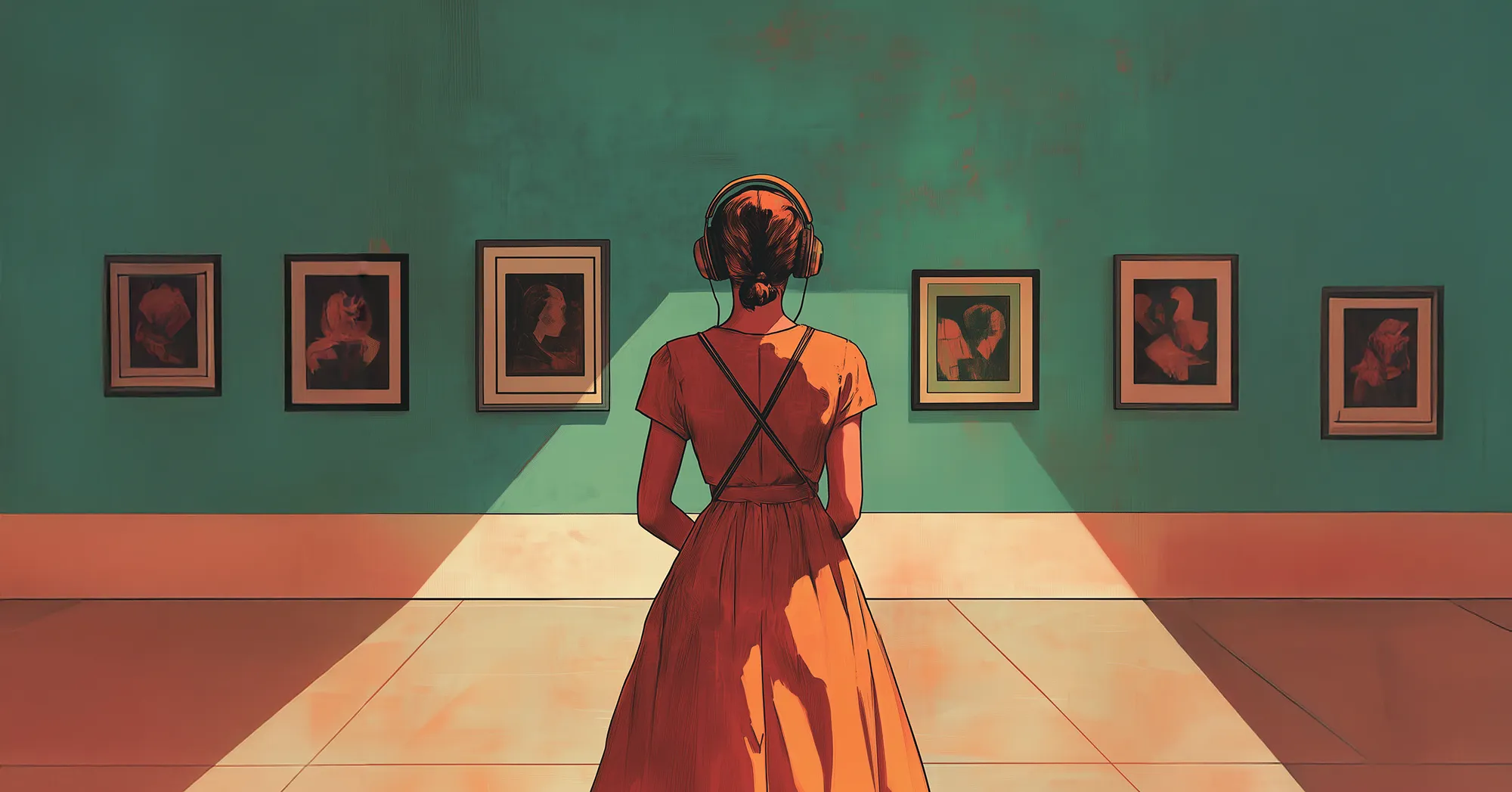
or years I have been perplexed by art galleries and museums offering headsets to people coming to exhibits – a phenomenon I call “Listening to Art.” Or why turn a visual experience into a mediated lecture?
Here’s an example: Some years ago, I visited a Damien Hirst exhibit at the Tate Modern. One of the exhibits included a room with paintings of butterflies, accompanied by living and expiring butterflies. Forty-nine people were admitted to the exhibit at any one time. In my group, I was struck by how many people rented the headset, dutifully concentrating on the recorded words – all the while quite oblivious to the butterflies flying and dying around them.
A few years later I saw another installation focused on “Self-imposed Restrictions” –which send me back to the this topic. Perhaps “listening to art” is exactly that: self-imposed restrictions that prevent viewers from cultivating their own sensibilities and enjoying their own reactions to the artworks. Listening, instead, to the droning voice of the biographer, curator, or critic hidden in the headset.
So, what does all of this have to do with the “pointless?” Maybe nothing, but… I am still partial to pointless theories and ideas. So here are a few–yet again.
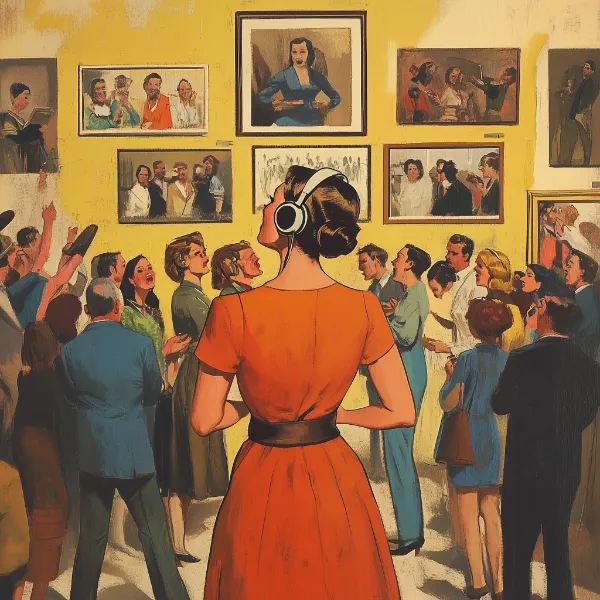
Wearing headsets in an art gallery is a metaphor for self-imposed restrictions that keep the viewer from experiencing non-verbal truths and realities.
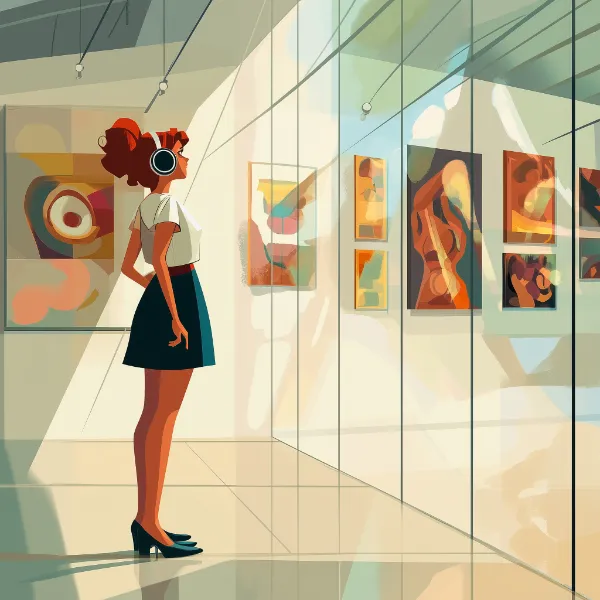
Wearing headsets separates the viewer from the artwork, deferring to the informative narrative. This degree of separation can be comforting but is most likely not an aesthetic experience.

Who is in control? I’ll admit that I don’t exactly get what Hirst was doing, and I’m not fond of dead butterflies. But at least one aesthetic theory is that the artist wants to be in control, hoping for unmediated aesthetic experience with the audience.