
Social Terrain
The Complete Idiot's Guide
Social Terrain: 10 Rules for Dinner Parties
I

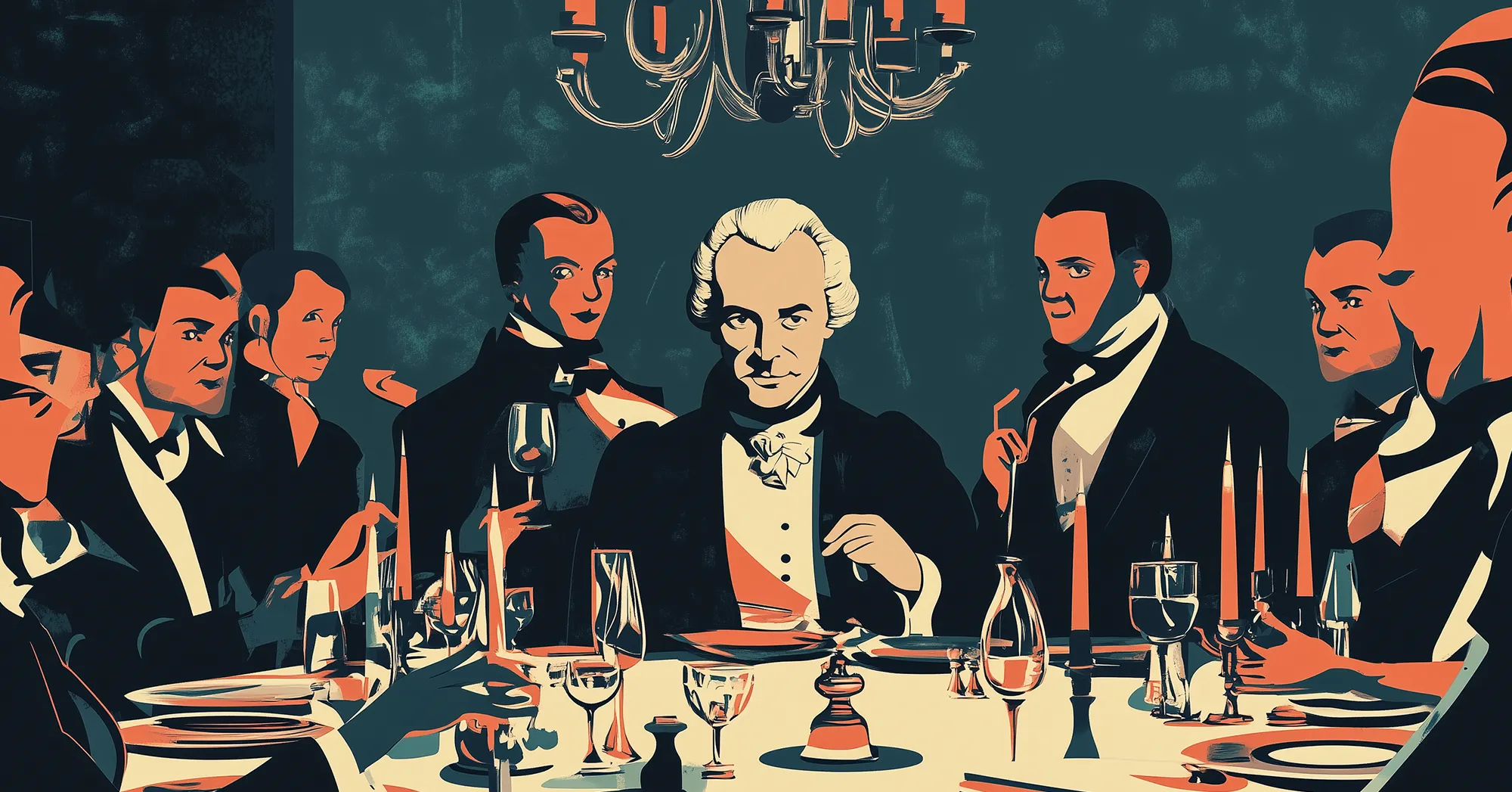
mmanuel Kant had clear views on what makes a successful dinner party. Social eating, according to Kant, gives the intellect relaxation and room to recuperate while not letting it come to a standstill.

In fact, Kant thought that dining alone was a bad idea which encouraged “intellectual self-gnawing” and, in the extreme, even pathological conditions — literal or figurative hypochondria. Even insanity!

According to Kant, the benefits of social eating (dinner parties) are not automatic, but social eating allows one to find a healthy middle way between minimum and maximum amounts of thinking.

Here, from the Age of Enlightenment, are 10 Rules for Dinner Parties, edited only somewhat by Olive.

Retro-style illustration of a formal dinner scene with three women seated at a round table in the foreground, engaging in conversation. Other elegantly dressed guests are seated in the background under a large chandelier.
Mid-century modern style split scene showing a formal dinner party on the left with guests dining under hanging lights, and a couple dancing on the right under spherical pendant lights.
Vintage illustration of four well-dressed individuals at an intimate dinner table, engaged in a serious discussion under a large overhead lamp with a warm, moody glow.
Stylized illustration of six groups of people sitting at small round tables having dinner, all connected by lines and arrows pointing to a central rose symbol, representing an interconnected conversation network.
Retro illustration of a party scene where guests at a formal dinner watch as broken vinyl records scatter across the floor, suggesting a sudden interruption in the music.
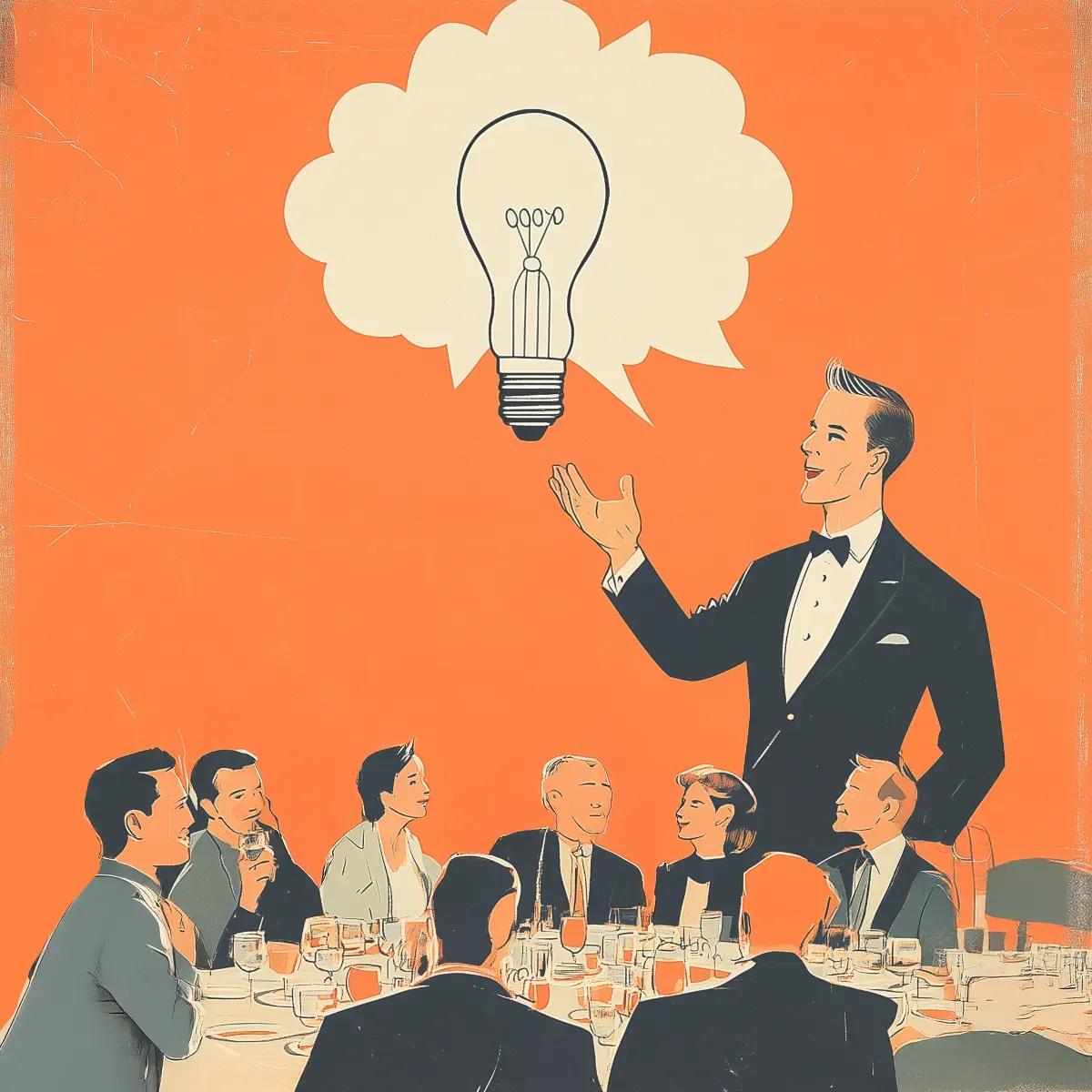
Stylized artwork of a man in a tuxedo speaking at a roundtable dinner, gesturing toward a large lightbulb inside a thought bubble, representing the sharing of ideas or topics of conversation.
Retro infographic-style image showing a dinner party where guests are connected by arrows to illustrated portraits and speech bubbles, symbolizing a web of conversations and social interactions.
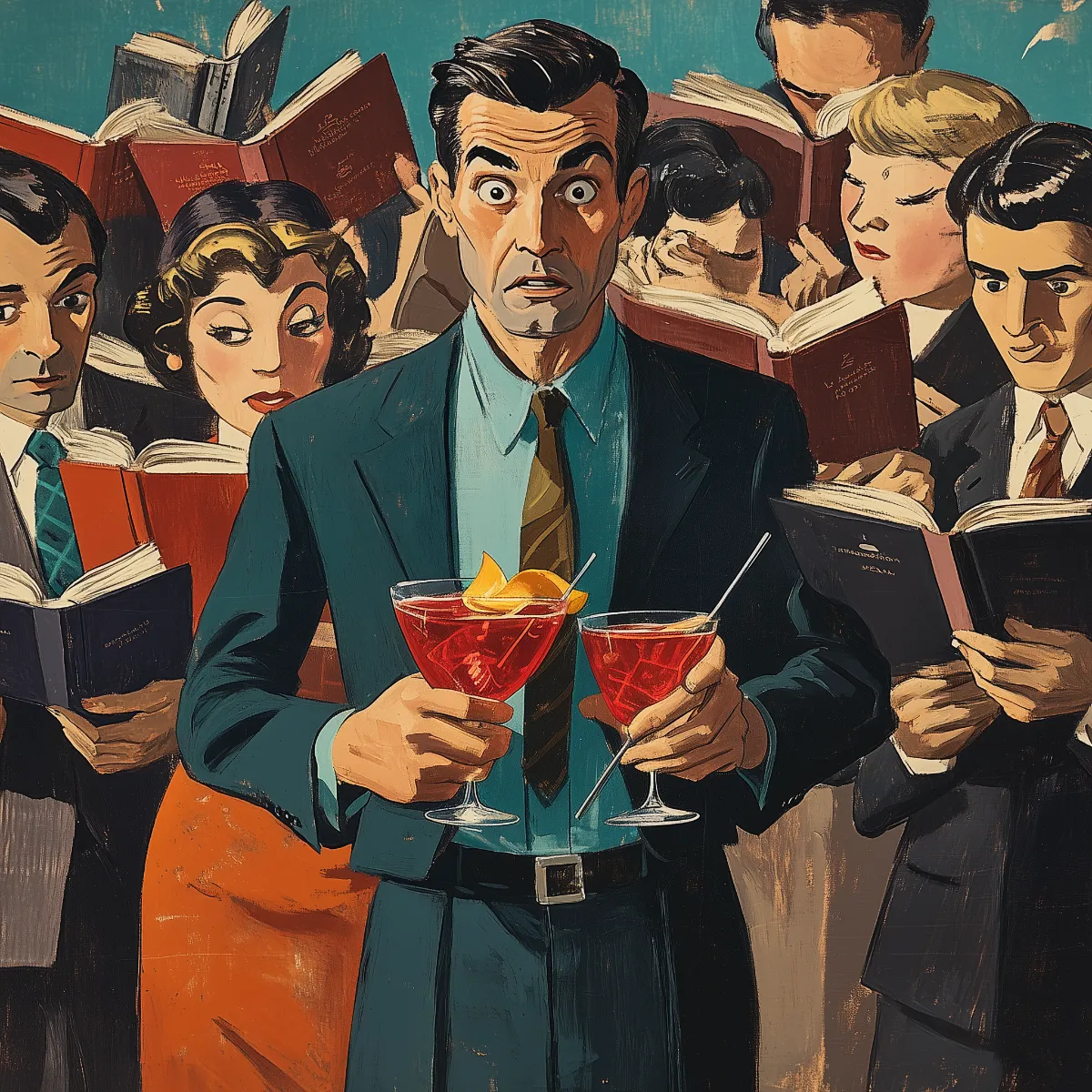
A startled man in a suit holding two red cocktails stands among a group of people intensely reading menus, with a confused and humorous expression suggesting a break in social interaction.
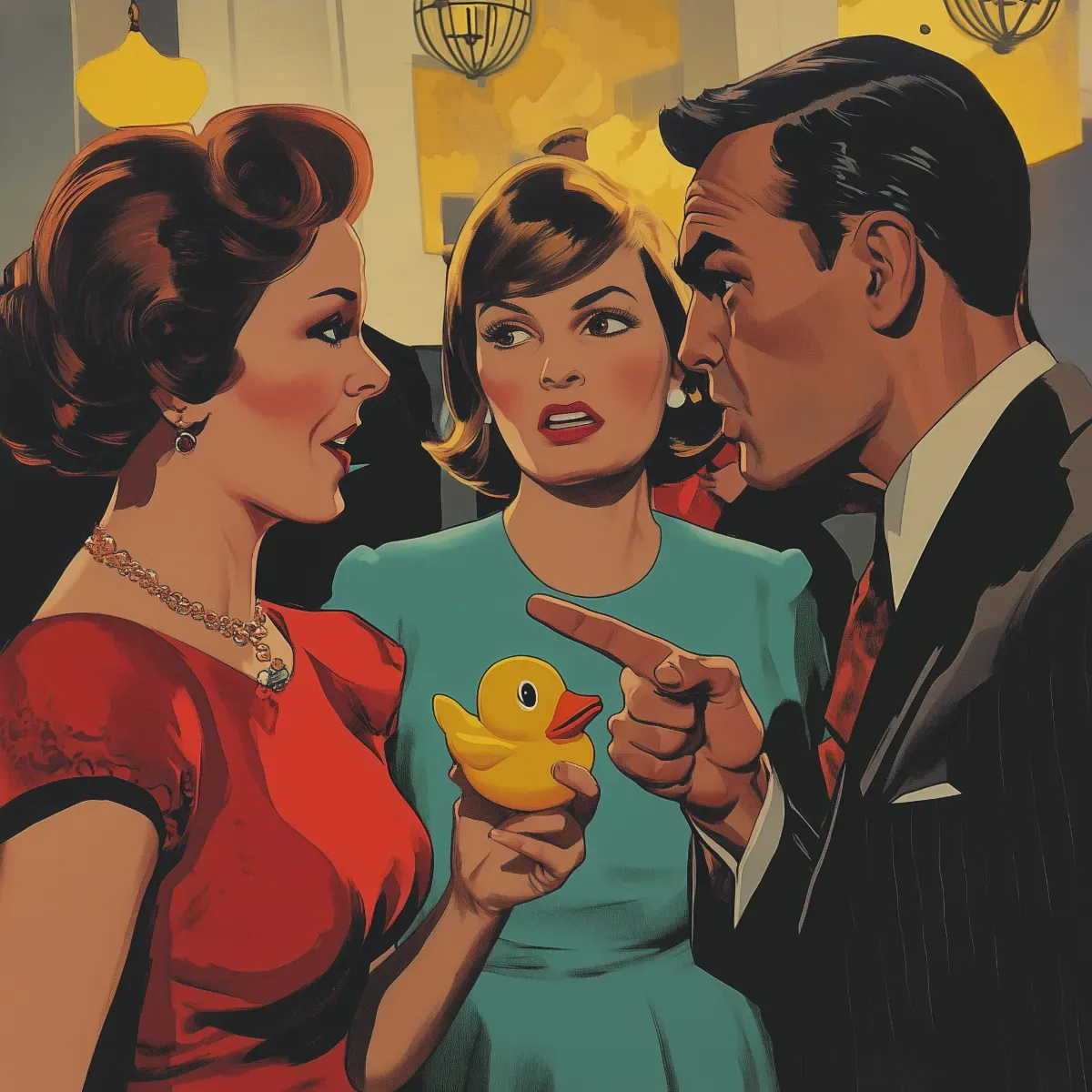
Dramatic illustration of a man pointing a finger at a woman holding a rubber duck, with another woman looking on in shock, set in a crowded formal gathering.
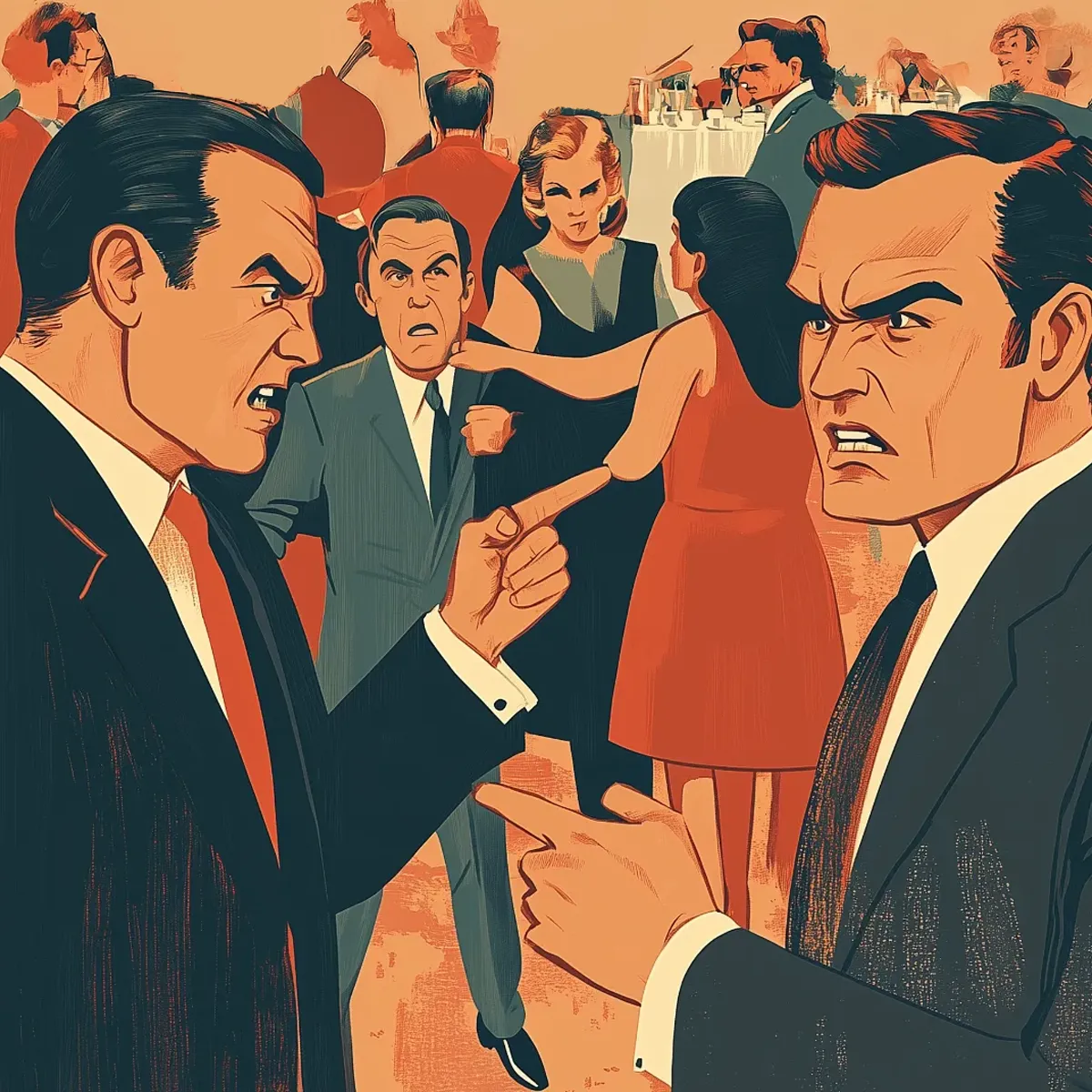
Tense mid-century style scene of two men in suits arguing and pointing at each other in the foreground, while other guests in the background appear distressed or trying to intervene at a crowded dinner event.
And one final word: Kant’s approach when discussing dinner parties was to use a personal example to discuss the role of sociability in the reasonable human life. He believed that human beings cannot simply rest on their laurels, but must to some degree make themselves rational animals. In his own experience, Kant knew of no more perfect example of reasonable sociability than his own dinner parties.