

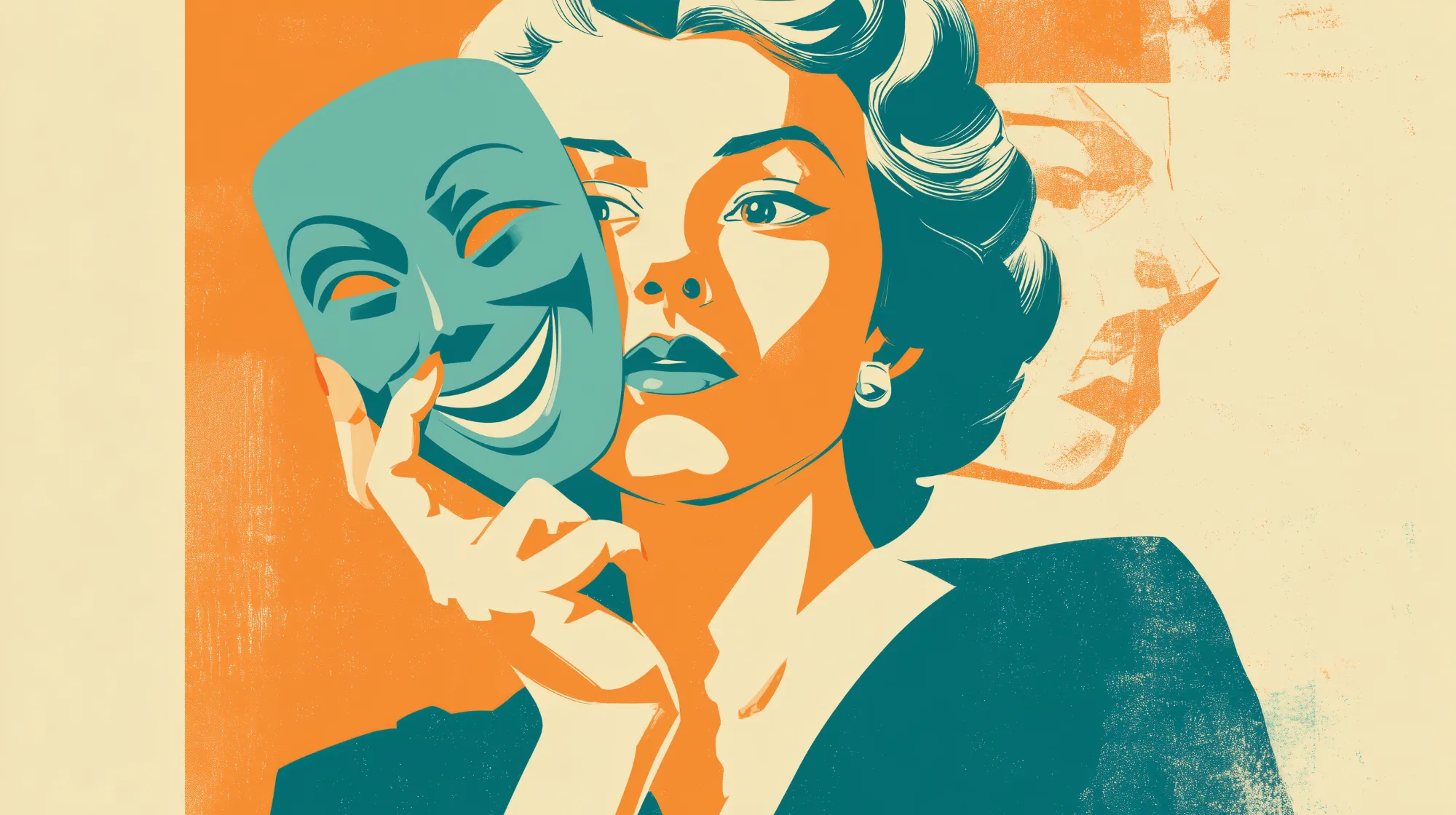
acial expressions are hard. They’re like cursive, you either learned to do them properly in school or you’re faking it with great effort and medium results. I did not learn. My face has one setting: “borderline hostile.” I was born with a face that says, “No.” Specifically, “No entry. No soliciting. No small talk” Or as society so generously dubbed it: resting bitch face. A term I accept because it is both rude and accurate, the way many things are.
Still, I persist. I stand in conversations I don’t want to be in, with people I don’t like, and contort my features into a facial charade I hope translates to “wrap it up.” It never does. People do not take the hint. They lean in. They begin anecdotes. They tell me about their cousin’s dog’s gluten intolerance.
Meanwhile, I’m panicking because I know I must engage and while I am scared of boredom, I am even more scared, yet naturally talented, at boring other people. This is my nightmare. Not hellfire and damnation—no, my hell is someone checking their phone mid-sentence while I’m telling a story about something that probably only minorly interested me to begin with.
Living in Britain has not helped. Here, people will nod politely through a heart attack. It is impossible to know when the conversation is over. Is it now? (can’t be, they’re still nodding.) Is it now? (Still nodding.) Is it…oh my god, do we live here now?
Then there’s the lull. That awful, empty lull. The silence where normal people smile softly and sip something. Not me. I sprint into that silence like it owes me money, filling it with whatever oral nonsense flies out of my anxiety factory. I once explained the plot of three separate Adam Sandler films in a row. And not the good ones.
And then, of course, when I can finally go home, I obsess. Was I annoying? Was I funny? Did they like me? Did I like them? I honestly don’t know. I wish people would hand out little report cards at the end of a chat like waiters with the bill. “Here’s how you did: C+ for interrupting (great effort!), A on your anecdotes, perfect blend of humour and this time, actually relevant (well done Brenda!)”
So yes, facial expressions are hard and yet I soldier on, putting myself out there, continuing to wander through life looking vaguely unamused. I still smile at babies and terrify them, still nod at strangers and somehow offend them but in a world full of small talk, social minefields, and gluten-intolerant dogs, maybe that’s the most any of us can do. Face it: we’re all faking something.